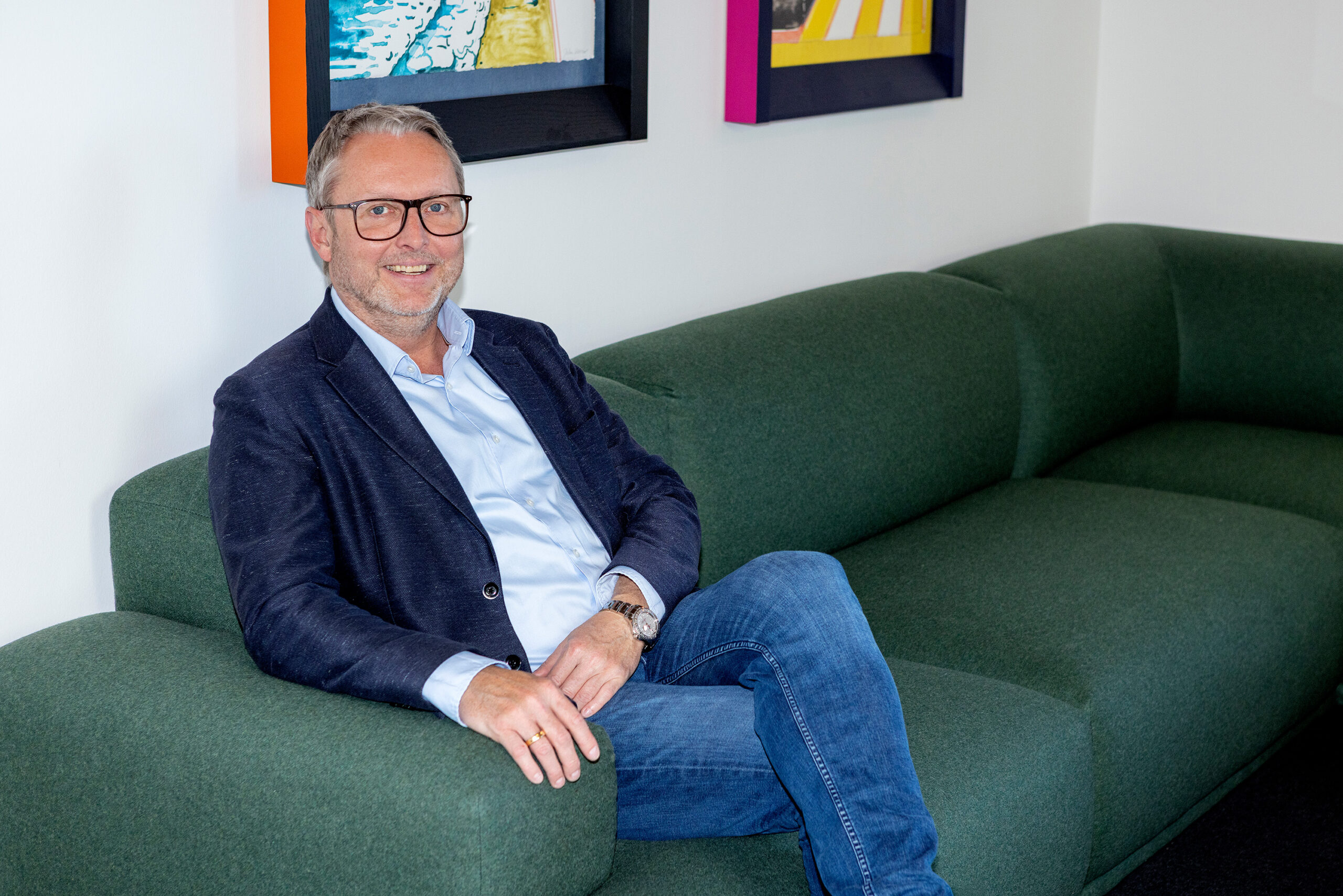
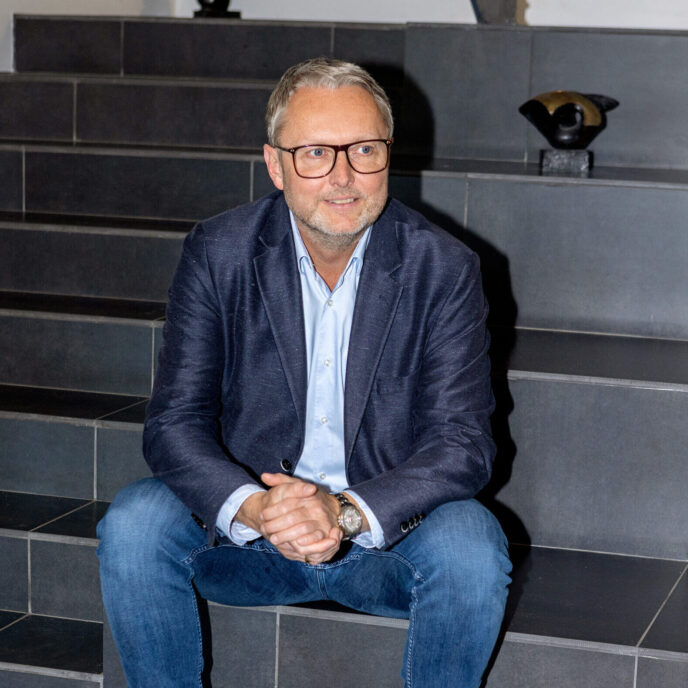
CIO Insights: Rasmus Lundgaard Pedersen, OK a.m.b.a.
Meet the transformational CIOs who are currently leading their businesses into the digital future.
Explore their most important initiatives, leadership goals, and how they see their roles evolving in the near future.
This time, in CIO Insights, we feature Rasmus Lundgaard Pedersen, CIO at OK a.m.b.a.
At some point, everything comes together in IT
Rasmus Lundgaard Pedersen, CIO at OK a.m.b.a. is navigating digital transformation, geopolitical uncertainty and critical infrastructure while helping reshape one of Denmark’s largest energy companies for a very different future.
As CIO at OK a.m.b.a., one of Denmark’s largest energy companies, Rasmus Lundgaard Pedersen operates at the intersection of digital transformation, geopolitics, critical infrastructure and digital dependency. In a world shaped by cyber threats, shifting alliances and growing uncertainty around technology sovereignty, risk assessment has become an integral part of the role:
’Geopolitics definitely affects my priorities, especially when it comes to how exposed we are with suppliers. What could happen is something we spend a lot of time thinking about, and in my corner of the business, digital sovereignty has become a major focus over the past year. As cyber and espionage threats continue to rise, we simply must stay much more alert around our dependencies. And because we operate in the energy sector, regulation also plays a role. Even hypothetically, if we chose not to take it seriously, legislation would still require us to have our house in order. So, to me, it’s not a single geopolitical event that I worry about, it’s the broader tectonic shifts we’ve seen over the past few years. As a CIO, that forces me to think very carefully about what our tech stack is built on.’
We make conscious choices and accept conscious risks
And when it comes to dependencies, Rasmus holds a clear opinion on where to look to avoid dependencies that can cause problems down the road:
‘We use Copilot, ChatGPT and cloud solutions and realistically there are no broad European alternatives with the same level of support. So, we make conscious choices and accept conscious risks, because we’re not going to bring our business to a halt. We would very much like to be more independent and sovereign, but at the same time we also want to use the best available solutions. That’s the eternal dilemma. We can’t look to China, and we can’t rely solely on the US either, so we must look towards Europe or the Nordics. It’s really that simple. I think we’re still far too unambitious in Denmark and across Europe. We have all the right ingredients, highly educated societies, stable institutions, strong industry, but we need to collaborate much more closely, especially across the Nordics, if we really want to move the needle.’
For Rasmus, digital transformation cannot be separated from the wider transformation of OK itself:
’What makes OK exciting is that we’re right in the middle of a major transformation, or really a form of disruption. The reality is that our core business for decades has been fossil fuels: petrol, diesel, heating oil. And that is changing dramatically now. The market that we need to become strong in is the charging infrastructure: for private cars, vans and increasingly for heavy transport as well. But it’s also about the broader energy market, where we are growing rapidly as an electricity provider to both private households and businesses. That’s our future, because the composition of vehicles and energy consumption in Denmark will look completely different ten years from now. So, we’re not just building charging stations, we’re building an entire digital infrastructure on top of them. When you press ‘start charging’ in the app, a whole cascade of things happens in the background before the car starts charging a second later.’
“Operations will always be the top priority”
As OK’s business evolves, expectations of the digital customer experience are evolving with it:
’Delivering a strong digital customer experience is critical for us. It must work every time, and it must be easy to use, because customers simply expect more and more from these kinds of solutions. So, a big part of our role is helping drive OK’s transformation, both as a strategic sparring partner and as an internal enabler. Over the coming years, we will essentially be replacing most of our tech stack, because we now have a completely different business with very different requirements.’
Those very different requirements still mean that there has to be a balance between operations and innovation, and even though innovation is crucial, Rasmus still knows what needs to be top of mind in order to make space for the innovation as well:
’At the end of the day, if things don’t work in the morning, whether for customers or internally, that’s what matters most. Operations will always be the top priority, no matter how you look at it. But beyond that, we’re also doing a great deal of innovation. Fortunately, we’re in a position where we can invest in the future, including in the large-scale transformation of our IT landscape.’
That combination is also what makes the role particularly exciting:
’The combination of having a major national footprint, being in the middle of a massive transformation, and working in a culture where we’re genuinely not afraid to try things is exciting to me, especially when it comes to AI. We have in fact been quite good at experimenting, whether it has been in terms of personal productivity or more concrete solutions in, for example, customer service. Organisationally, we’re probably where many others are: we are experimenting a lot while still learning what genuinely creates value. We’re still at the beginning of the journey in terms of finding the right tool stack. AI also requires a solid data foundation, otherwise you quickly run into limitations. We are already seeing that in some of the things we are testing.’
There can definitely be a sense of AI FOMO
Even so, OK is investing heavily in AI over the coming years, while Rasmus is also candid about how difficult the pace of development can feel and admits to a feeling many technology leaders will recognise:
’AI can make us more efficient and help build even better digital solutions for our customers. But it is also evolving so fast that I’ve never experienced anything like it in my professional life. So, there can definitely be a sense of AI FOMO: will I miss out on something? I feel I could spend an entire day on it every single day – and still feel a bit behind.’
However, Rasmus is far from behind and is leading his team with a very conscious eye on how his role and his leadership is evolving:
‘What makes a role like mine unique is the ability to create cohesion. At some point, everything comes together in IT, and everyone depends on it, which gives my team and me a particular responsibility.’
The arena today is completely different from what it used to be
‘I often say that the role today requires you to be just as much a foreign minister as an interior minister. There’s an increasing need for that outward-looking perspective, because the risk landscape has become much clearer. Regulation plays a much bigger role than it used to, and executive teams are far more focused on these issues now.
That also means I can’t spend 90 percent of my time looking inward anymore. I need to look outward as well: at geopolitics, suppliers, regulation, and everything happening around us externally. The arena today is completely different from what it used to be.’
I’m not a micromanager in any way
But while both the world around him and the role itself continue to change, Rasmus’ core values as a leader have remained the same:
‘If I had to describe my leadership in one word, it would be decency. I can’t compromise on my integrity. People need to feel they can trust me and trust what I say. I make a point of keeping my promises and treating everyone, regardless of position, properly and with respect. That is fundamental to me. I’m not a micromanager in any way. People need to be able to operate within an overall framework, because leadership simply doesn’t work otherwise in a world where things move this fast and are this complex. That’s why I place a great deal of trust in the people around me. It’s about how we collectively keep the ship moving forward as a team. And I learned that the hard way early in my career, when as a new leader I made a wrong hire, that I should have dealt with much earlier. I let it continue for too long, and it created ripple effects in the team. I ignored my gut feeling. And I remember thinking afterwards: that simply cannot happen again. And it also taught me something else: you never finish learning as a leader. I still get surprised by how much there is to learn both about myself and about leadership. It’s lifelong learning.’
And another lesson learned is the deep understanding of what a problem really is:
‘Many of the difficult problems inside organisations aren’t technology problems at all. They’re about trust, understanding, and collaboration. Those problems are very often what you’re actually leading, not technology.’
Being involved in other kinds of challenges is genuinely stimulating
To broaden his perspective, Rasmus actively seeks out discussion, feedback and inspiration through networks such as the CIO Transformation Board:
’I’ve already used the CIO network for very concrete challenges. I was able to ask highly specific questions, and input came from all directions. It’s an incredible network to have access to. I’m extremely ambitious, both personally and on behalf of the role itself. One of the things I most enjoy discussing with other CIOs is what this role can actually become. There’s real gold in that conversation. And frankly, I’m not afraid to reach out for a second opinion. I have a broad network, and I’m quite selective about who I go to for different kinds of input. It’s also why I enjoy executive programmes and board work. It gives me a different perspective. Being involved in other kinds of challenges is genuinely stimulating.’
Yet despite the pace, the responsibility and the constant transformation, one part of life remains the most important to him:
‘The most meaningful thing for me, truly, is being a father. At the end of the day, that’s what matters most. My boys and their curiosity mean an enormous amount to me.’
The CIO Transformation Board
In the Danish ICT Industry Association (IT-Branchen), we have the CIO Transformation Board, which brings together the most visionary CIOs from Denmark’s large and medium-sized companies. These are CIOs from businesses where digitalization is a strategic part of the business — but where there is also a desire to do more than just digitalize.
We aim not only to highlight Denmark’s most talented CIOs and share experiences and best practices across industries, but also to set the agenda in the media and with politicians regarding Denmark’s and the business sector’s digital future.
The CIO Transformation Board is created for those who also want to help find the new balance between people and technology. For those who have a stance and want to help influence our green transition, address the skills shortage, and strengthen growth in Denmark.
At TV 2 Danmark, technology has moved from the sidelines to the center of strategy. CTO Anders Lerbech Borregaard is leading a transformation that combines digital scale with public service responsibility – balancing personalization, trust, and shared national experiences.
In this edition of CIO Insights, we feature Anders Lerbech Borregaard, from TV 2 Danmark.
Executive Director Thore Dankert is leading Novo Holdings’ digital transformation with a people-first approach, ensuring technology serves the business strategy and not the other way around.
In this edition of CIO Insights, we feature Thore Dankert form Novo Holdings.
For Coloplast’s CIO René Rasmussen, imagination fuels his leadership mission to turn diverse team thinking into technology that creates real impact for people with intimate healthcare needs.
In this edition of CIO Insights, we feature René Rasmussen form Coloplast.
As Director of Corporate IT at the Novo Nordisk Foundation, Niels Pærregaard combines clear governance, trust-based leadership, and a unifying approach to technology, ensuring that IT not only supports the foundation’s mission but actively enables scientific, societal, and organisational impact.
In this edition of CIO Insights, we feature Niels Pærregaard from Novo Nordisk Foundation.